Leave frost for the way back
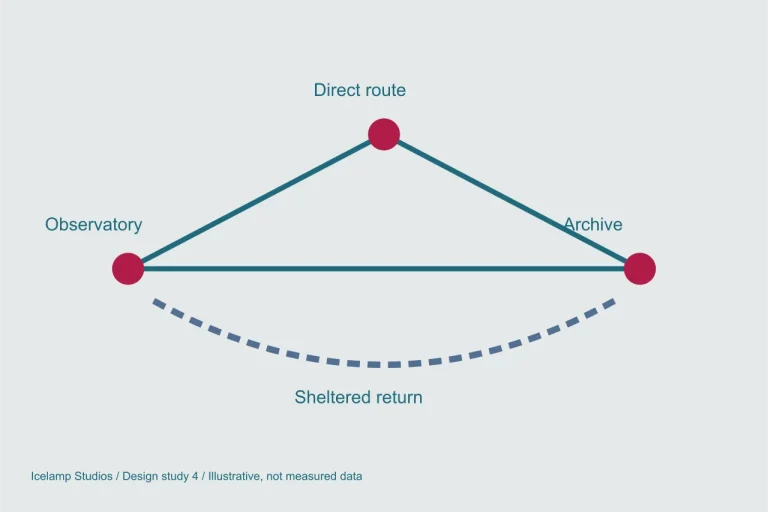
A Quiet Thaw design record about route maintenance, limited frost and return journeys, exploring choices that matter beyond the first successful crossing.

OBSERVE / BUILD / RETURN
POLAR CONCEPT ARCHIVE
An evolving line of inquiry
Follow each observation from its premise to the question it leaves open.
A Quiet Thaw design record about route maintenance, limited frost and return journeys, exploring choices that matter beyond the first successful crossing.
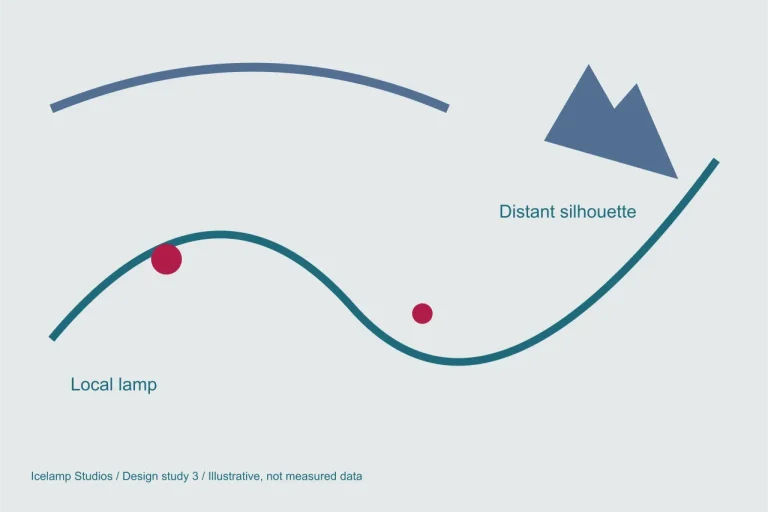
An Icelamp navigation study on local lamps, distant silhouettes and reflected aurora, with readable landmarks that retain meaning on the return route.
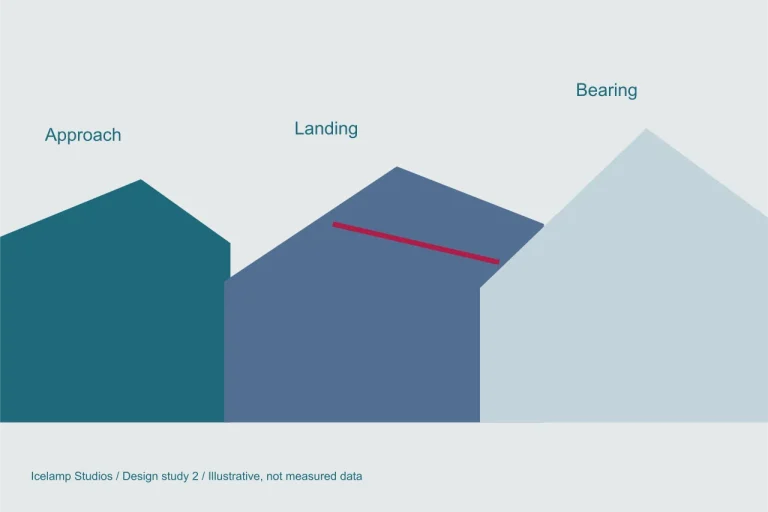
Explore how layered ice, overlap, light and camera framing can communicate depth in Icelamp’s polar concepts without covering the scene in interface cues.
A Rift Lantern design note on choosing bridge anchors, showing support before commitment and making the far landing part of the crossing decision.
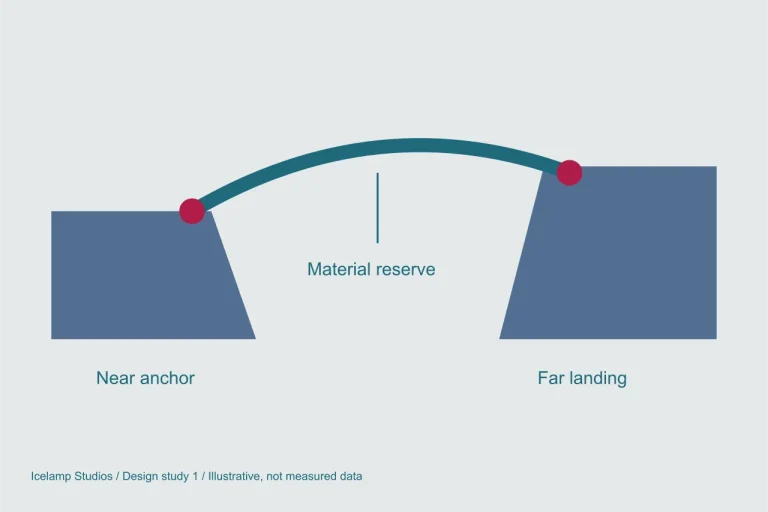
Start with bridge anchors if you want to understand what a player chooses before crossing. The depth study then asks how a glacier wall can communicate distance without becoming a flat diagram. The light record moves outward to landmarks, examining how a pale surface and a crimson lamp can help someone recognise a route. Finally, the return-cost entry looks at decisions that persist after the first successful crossing.
Each note links back to a game concept and to another relevant record. That makes it possible to follow a practical question through several scales rather than treating every post as an isolated announcement. The diagrams are design illustrations, and the scenarios are proposed examples. We do not describe them as completed experiments or quote invented player reactions.
If you are looking for the broader projects, visit Ice Cores. For the working approach behind these notes, read the Observatory. New findings should earn their own record when there is a specific decision to explain.